Most Indian kitchens have a masala dabba sitting on the counter, a little row of glass bottles on a shelf, or a jumble of packets stuffed into a drawer. Spices are everywhere. But how many of those spices are actually doing their job? A dull, musty haldi or a red chilli powder that smells of nothing except old cardboard can quietly ruin a dish without you ever knowing why it did not taste right.
Good spice storage is not complicated, but it does require a few deliberate choices. Here is what actually works, and what most people get wrong.
Why Proper Storage Matters More Than You Think
Spices do not go "bad" the way milk does. They do not develop mould overnight or make you sick. What they lose is potency. The essential oils that give turmeric its earthy warmth, red chilli its heat, and coriander its citrusy lift are volatile. They evaporate when exposed to heat, light, air, and moisture. Once those oils are gone, you are left with coloured powder that tastes of very little.
Poor storage also speeds up oxidation. Ground spices, especially anything with a high fat content like cumin or coriander, can go rancid. That slightly bitter, off note you sometimes get in a curry? Nine times out of ten, it is a stale spice.
When you cook with Nandi masalas, you are starting with well-sourced, properly processed spices. The storage is the last step in keeping that quality intact until it reaches your food.
How to Tell If Your Spices Have Gone Stale
The simplest test is your nose. Open the container and take a good sniff. Fresh turmeric has a sharp, earthy, slightly bitter aroma. Fresh red chilli smells bright and fruity before the heat hits. Fresh coriander powder smells faintly of citrus and dried orange peel. If you open a jar and get nothing, or worse, a musty or rancid smell, the spice is past its best.
For whole spices, rub a pinch between your fingers. Fresh jeera will release a warm, earthy scent on contact. If nothing happens, the oils are gone.
Colour is another indicator, though less reliable. Turmeric that has faded from deep golden to pale yellow has likely lost flavour as well. Red chilli powder that looks orangey-pale rather than deep brick red has been oxidised.
As a general rule: if you bought a spice more than 18 months ago and it has been sitting in a warm kitchen, open it and test it before adding it to anything important.
The Best Containers for Spice Storage
Glass Jars
Glass is the best option for ground spices. It does not absorb odours, does not leach chemicals, and you can see the contents clearly. Tight-sealing glass jars with rubber gaskets are ideal. Old jam jars with metal lids work fine too, as long as the lid seals properly. The only downside is that glass lets in light, so either store your jars in a dark cabinet or use tinted glass.
Stainless Steel Containers
The traditional Indian masala dabba and the steel bottles found in most homes are excellent for spices you use daily. Steel is opaque (protects against light), durable, and does not retain smells. The only limitation is that unless the lid seals very tight, they are better for frequently used spices that you go through quickly rather than for long-term storage.
Plastic Containers
Plastic is the weakest option. Many plastics are porous enough to absorb strong spice odours over time, and they can also leach trace chemicals when exposed to aromatic compounds. If you must use plastic, opt for thick, food-grade containers with tight lids, and replace them every year or two.
Whole Spices vs Ground Spices: Shelf Life Differences
This is the single most useful thing to understand about spice storage. Whole spices last significantly longer than their ground counterparts. The reason is simple: grinding exposes a vastly larger surface area to air, heat, and moisture, accelerating the loss of volatile oils.
- Whole spices (jeera, coriander seeds, black pepper, cloves, cardamom, cinnamon sticks): properly stored, these stay potent for 2 to 4 years.
- Ground spices (haldi, lal mirch powder, dhania powder, hing): best used within 12 to 18 months of purchase.
- Blended masalas (sabji masala, garam masala): typically best within 6 to 12 months, since the blend contains multiple ground spices that may degrade at different rates.
If you cook regularly and want the best flavour from Nandi sabji masala or any other blended spice, buy in the size you will finish within 3 to 4 months rather than stocking up in bulk.
Ideal Storage Conditions
Three things degrade spices: heat, light, and moisture. Remove all three and your spices will last considerably longer.
- Cool: The ideal storage temperature for spices is below 25 degrees Celsius. In Indian summers, many kitchens regularly hit 35 to 40 degrees near the stove. A cabinet on the far wall from the stove, or a lower shelf in the pantry, will be meaningfully cooler than a rack next to the gas burner.
- Dark: UV light degrades both the colour and the flavour compounds in spices. A closed cabinet is infinitely better than an open shelf, even a shelf that gets indirect sunlight for only a few hours a day.
- Dry: Moisture is the enemy, especially for ground spices like haldi and hing, which can cake and clump badly. Keep spice containers away from the sink, never store spices above the stove where steam rises, and always use a dry spoon to scoop.
Specific Tips for Common Indian Spices
Haldi (Turmeric)
Nandi haldi is finely ground from high-curcumin varieties. To keep it potent, store in a tightly sealed glass jar away from light. Turmeric stains containers permanently, so either dedicate a jar to it or use stainless steel. Do not store it near the stove; the steam from daily cooking will cause it to cake up along the sides of the container within weeks.
Lal Mirch (Red Chilli Powder)
Red chilli powder is particularly sensitive to heat and oxidation. The colour fades and the heat flattens out faster than almost any other ground spice. If you buy Nandi lal mirch in larger quantities, keep only what you need for a month in your daily-use container and store the rest in an airtight jar in the refrigerator. The cold slows oxidation significantly.
Dhania Powder (Coriander Powder)
Coriander powder has a higher fat content than most spices, which means it can go rancid if stored poorly. It also absorbs smells from nearby spices. Keep Nandi dhania powder in its own sealed container, not loose in a shared masala dabba with very strong spices like hing or kalonji.
Hing (Asafoetida)
Hing deserves its own discussion because it is the most potent and problematic spice to store. Left unsealed even briefly, it will perfume every other spice and ingredient in the vicinity. Nandi hing should be stored in a double-sealed container: the original container inside another airtight jar or zip-lock bag. Keep it completely separate from everything else. Many cooks store hing in a small tin with a screw lid, then put that tin in a sealed container. It sounds excessive until you open your masala dabba one day and everything in it smells of hing.
Sabji Masala
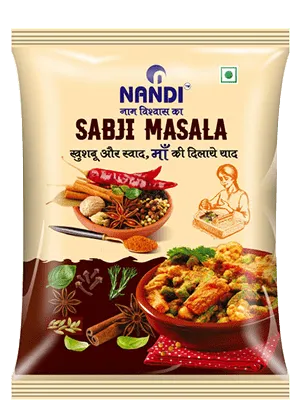
Blended masalas like Nandi sabji masala are already ground and combined, which means they are more vulnerable than single-ingredient spices. Once you open a packet, transfer the contents to a glass jar immediately. Do not leave it in the foil packet with a fold at the top. That is not airtight, and within a week you will notice the aroma starting to fade.
Common Mistakes Most People Make
Storing spices next to or above the stove. This is the most common and most damaging mistake. The heat from cooking, even from adjacent burners, and the steam that rises during boiling or pressure cooking both accelerate spice degradation. A spice rack mounted above the stove might look convenient and attractive, but your spices will lose flavour 3 to 4 times faster than those stored in a cool cabinet.
Using a wet or damp spoon. A single scoop with a slightly damp spoon introduces enough moisture to start caking and clumping in a ground spice jar. Always use a completely dry spoon. Better yet, tap the required amount out of the container rather than scooping directly from the jar.
Keeping spices in the original packets after opening. Most spice packets are not designed for repeated opening and closing. Once you have torn a packet open, the seal is gone. Transfer everything to proper containers on the day you open a new packet, not after you have used it a few times.
Buying more than you can use. Bulk buying saves money per kilogram, but if you are buying more than you will realistically use in 4 to 6 months, you are not saving anything. You are just eating stale spices.
How to Revive Slightly Stale Spices
If a spice is past its best but not rancid or mouldy, dry roasting can revive some of its potency. Heat a dry pan on medium flame, add the spice, and stir constantly for 30 to 60 seconds until you start to smell the aroma releasing. Cool completely before putting it back in the container.
This works best with whole spices like jeera, dhania seeds, or black pepper. With ground spices, you need to be careful because ground powder can burn very quickly in a dry pan. Use low heat and watch it closely. This method will not fully restore a very stale spice, but it can make a noticeable difference with something that is only slightly past its prime.
Do not try to revive hing this way. It does not work, and you will just end up with a smoke alarm situation.
Get the freshest Nandi masalas delivered in minutes on Blinkit. Nandi's full spice range includes sabji masala, turmeric, red chilli, coriander powder, and hing, all packed to preserve freshness from production to your kitchen. Order only what you need, when you need it, and your spices will always be at their best.