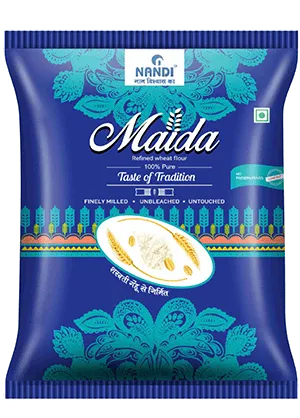
Maida gets a lot of negative attention in health circles. "Maida is poison" is a statement you have probably seen on social media. But is it really? Let us separate facts from fear-mongering and understand when maida is perfectly fine, and when whole wheat is the better choice.
What is Maida?
Maida is finely milled wheat flour with the bran and germ removed. This gives it a smooth, white texture and makes it ideal for recipes where you need a light, airy, or flaky result. It is the same concept as "all-purpose flour" used worldwide in bread, pastries, cakes, and countless other foods.
Myth vs Fact
Myth: "Maida is bleached with chemicals"
Fact: Quality maida like Nandi Maida is unbleached and untouched. The white colour comes from the natural endosperm of wheat, not from bleaching agents. The milling process removes the brownish bran, leaving behind the pale endosperm. Always check the label, as reputable brands clearly state "unbleached".
Myth: "Maida has no nutrition"
Fact: Maida contains 10.3g protein per 100g, 364 kcal energy, and 76.3g carbohydrates. It is lower in fibre than whole wheat (because the bran is removed), but it is not "empty calories". It provides energy and protein. The issue is not that maida has no nutrition. It is that whole wheat has more.
Myth: "Maida causes diabetes"
Fact: No single food causes diabetes. Maida has a higher glycemic index than whole wheat, meaning it raises blood sugar faster. For people with diabetes, whole wheat is generally the better daily choice. But for occasional use in recipes, maida is not going to cause a health crisis.
When Maida is the Right Choice
Some recipes simply do not work with whole wheat flour:
- Samosas: The flaky, crispy shell requires maida's gluten structure. Whole wheat samosas are dense and tough.
- Naan: The soft, pillowy texture of naan comes from maida. Try making it with atta and you will understand the difference.
- Gulab jamun: The melt-in-mouth texture is impossible without maida's fine consistency.
- Cakes and pastries: Baking science relies on maida's uniform protein content for consistent rising and texture.
- Mathri: The legendary flaky crunch comes from the way ghee interacts with maida's starch.
These are celebration foods, festival treats, and occasional indulgences, not daily staples. And there is absolutely nothing wrong with enjoying them.
The Balanced Approach
Use Nandi Choker Sahit Atta (whole wheat) for your daily rotis, parathas, and regular cooking. Use Nandi Maida for specific recipes where its texture is needed. This is exactly how Indian kitchens have operated for generations. Both have their place.
Nandi Maida is trusted by Parle and Haldiram for their bakery operations. It is finely milled, consistent in quality, and FSSC 22000 certified. When a recipe calls for maida, use it with confidence. Just keep your everyday cooking on whole grains.
Explore our Samosa recipe, Gulab Jamun recipe, and Butter Naan recipe to see Nandi Maida at its best.