India has over 100 million people living with diabetes, and for most Indian families, roti is the primary source of daily carbohydrates. The atta you choose can make a real difference in managing blood sugar levels. But with so many options available (regular atta, multigrain atta, millet flour, diabetic atta), it can be confusing to know what actually works. Let us break it down with science and practical advice.
Glycemic Index Kya Hai? (What is Glycemic Index?)
The Glycemic Index (GI) measures how quickly a food raises your blood sugar levels after eating. Foods are rated on a scale of 0 to 100:
- Low GI (55 or below): Slow, gradual rise in blood sugar. Best for sugar patients.
- Medium GI (56 to 69): Moderate rise. Acceptable in controlled portions.
- High GI (70 and above): Rapid spike in blood sugar. Best avoided.
For people managing diabetes, choosing lower GI foods helps maintain steadier blood sugar levels throughout the day, reducing the risk of sudden spikes and crashes.
Types of Atta and Their Impact on Blood Sugar
1. Refined Flour (Maida): Avoid Completely
Maida has a GI of 70+, which means it causes rapid blood sugar spikes. During refining, the bran and germ are stripped away, removing the fibre and nutrients that slow down digestion. Puris, naan, and anything made with maida should be minimised or avoided by sugar patients.
2. Regular Whole Wheat Atta: Better, But Not Ideal
Standard whole wheat atta has a GI of around 60-65, placing it in the medium category. It is significantly better than maida because it retains some fibre and nutrients. However, many commercial "whole wheat" attas are roller-milled, which means some of the bran is lost during processing. The result is atta that looks like whole wheat but does not deliver the full benefit.
3. Choker Sahit (Bran-Retained) Atta: A Strong Choice
This is where things get interesting for sugar patients. When 100% of the wheat bran (choker) is retained in the atta, you get significantly more dietary fibre. Research published in Diabetes Care has shown that wheat bran consumption helps improve glycemic control. An Indian study found that wheat bran supplementation lowered fasting glucose levels by an average of 22.8 mg/ml. The fibre in bran slows down the digestion and absorption of carbohydrates, resulting in a more gradual rise in blood sugar after meals.
A meta-analysis in PLoS Medicine covering over 286,000 participants found that a two-serving-per-day increase in whole grain consumption was associated with a 21% decrease in the risk of developing type 2 diabetes, with the association being stronger for bran specifically than for germ.
4. Multigrain Atta: Lower GI Option
Multigrain atta, which blends whole wheat with grains like barley, oats, bajra, and ragi, typically has a GI of 44-50. The diverse grain mix provides a variety of fibres and nutrients that slow digestion. Research in Preventive Nutrition and Food Science has shown that rotis made from multigrain flour have lower glycemic responses compared to whole wheat rotis. If you can find a good quality multigrain atta (check that it is not mostly maida with token amounts of other grains), this can be an excellent option.
5. Millet Flours: Excellent for Blood Sugar
Individual millet flours offer specific benefits:
- Ragi (Finger Millet): High in calcium and fibre, with a low glycemic index. Widely used in South India.
- Bajra (Pearl Millet): Low GI, high in iron and magnesium. Works well for rotis in Rajasthan and Gujarat.
- Jowar (Sorghum): Complex carbohydrates that digest slowly. Popular in Maharashtra.
The challenge with pure millet rotis is that they can be hard to roll and may not have the familiar texture that wheat roti lovers are used to. A practical approach is to mix millet flour with whole wheat atta for a balance of taste and blood sugar management.
GI Comparison Table: Different Atta Types
| Atta Type | GI Range | GI Category | Suitability for Diabetes |
|---|---|---|---|
| Maida (Refined Flour) | 70+ | High | Avoid |
| Regular Whole Wheat Atta | 60-65 | Medium | Moderate (with portion control) |
| Choker Sahit (Bran-Retained) Atta | 50-58 | Low to Medium | Good |
| Multigrain Atta | 44-50 | Low | Very Good |
| Ragi/Bajra/Jowar Flour | 40-55 | Low | Excellent |
Why Nandi Choker Sahit Atta Works for Sugar Patients
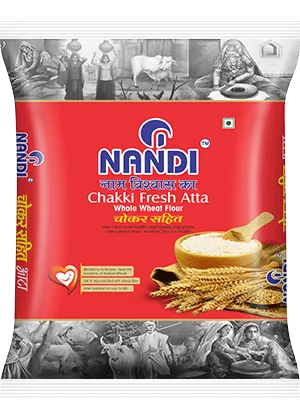
For families where someone has diabetes but everyone still wants to eat regular rotis together, Nandi Choker Sahit Aata is a practical and effective option. Here is why:
- 100% bran retained: Unlike many "whole wheat" attas where some bran is removed during roller milling, Nandi retains all the bran (choker). This means maximum dietary fibre in every roti.
- Stone-ground (chakki) milling: The traditional grinding process preserves the natural structure of the grain, keeping the fibre intact and functional. This is important because the physical form of fibre affects how well it slows carbohydrate absorption.
- Sharbati wheat blend: Sharbati typically has higher protein content (12-14%) than regular varieties. Protein also helps slow the glycemic response of a meal.
- No artificial additives: No preservatives, no added colour, no bleaching agents.
- FSSC 22000 certified: You can be confident about the quality and safety of what you are feeding your family.
Practical Tips for Sugar Patients
Choosing the right atta is important, but it is only part of the picture. Here are some practical dietary tips:
- Control roti size and quantity: Even with low-GI atta, portion control matters. Stick to 2-3 small rotis per meal rather than 4-5 large ones.
- Pair rotis with protein and fibre: Eat roti with dal, sabzi, and curd. The protein and additional fibre from these sides further slow down glucose absorption.
- Avoid eating roti alone: A roti by itself will raise blood sugar faster than a roti eaten as part of a balanced meal.
- Consider timing: Some people find that rotis at dinner affect their fasting blood sugar more than rotis at lunch. Monitor your own patterns.
- Add vegetables to dough: Mixing grated lauki (bottle gourd), methi (fenugreek leaves), or palak (spinach) into your dough adds fibre and nutrients while reducing the carbohydrate density.
- Walk after meals: A 15-minute walk after eating helps your body process glucose more efficiently.