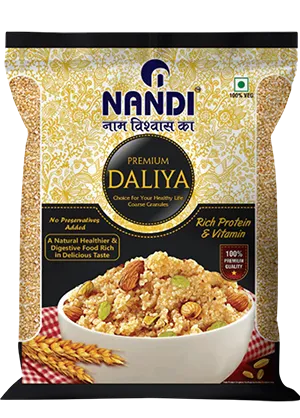
In the age of quinoa, chia seeds, and imported superfoods, we often overlook what has been sitting in Indian kitchens for centuries. Daliya (broken wheat or cracked wheat) is one such ingredient. It is whole grain, high in fibre, low in glycemic index, and costs a fraction of trendy alternatives. Here is why it deserves a permanent spot in your diet.
Nutritional Profile of Daliya
| Nutrient | Per 100g |
|---|---|
| Calories | 342 kcal |
| Protein | 12g |
| Dietary Fibre | 10g |
| Carbohydrates | 72g |
| Fat | 1.5g |
Why Daliya is Great for Weight Loss
Daliya's high fibre content (10g per 100g) means it keeps you full for hours. Unlike refined cereals or white rice, it releases glucose slowly into the bloodstream, preventing energy crashes and sugar cravings. A bowl of daliya khichdi for breakfast can keep you satisfied until lunch without the need for mid-morning snacking.
Research shows that whole grain consumption is associated with lower body weight and reduced risk of obesity. Daliya is one of the most affordable and accessible whole grains in India.
Daliya for Diabetes Management
With a glycemic index of approximately 41-55 (depending on preparation), daliya falls in the low-to-medium GI category. The high fibre slows down carbohydrate absorption, preventing sharp blood sugar spikes after meals. Many nutritionists recommend daliya over white rice and refined wheat products for people managing type 2 diabetes.
Heart Health Benefits
Daliya retains the bran and germ of the wheat kernel, which means it contains all the heart-protective nutrients: soluble fibre (lowers LDL cholesterol), magnesium (regulates blood pressure), B vitamins (reduces homocysteine levels), and antioxidants (fights oxidative stress). Regular consumption of whole grains like daliya has been linked to a 20-30% lower risk of cardiovascular disease.
5 Easy Daliya Recipes
1. Daliya Khichdi (Savoury Porridge)
The most popular way to eat daliya. Cook 1 cup Nandi Daliya with mixed vegetables, turmeric, cumin tempering, and salt in a pressure cooker for 2 whistles. Comfort food at its finest. Ready in 20 minutes.
2. Sweet Daliya (Meethi Daliya)
Roast daliya in ghee, then cook with milk, sugar/jaggery, cardamom, and dry fruits. A wholesome sweet breakfast that kids love. Healthier than sugary cereals by every measure.
3. Daliya Upma
Similar to sooji upma but with more fibre. Roast daliya, prepare a vegetable tempering, cook with water till fluffy. The nutty, chewy texture makes this version even more satisfying than the sooji original.
4. Daliya Biryani
Replace rice with daliya in your regular vegetable biryani. Same spices, same layering technique, but with the added benefit of whole grain nutrition. The texture holds up beautifully and absorbs flavours well.
5. Daliya Dosa
Soak daliya for 2 hours, grind with urad dal, ferment overnight. Make dosas as usual. Crispier than regular dosa with a lovely nutty flavour. A South Indian twist on a North Indian grain.
Who Should Eat Daliya?
- Weight watchers: High satiety, moderate calories, whole grain goodness
- Diabetics: Low GI, high fibre, steady energy release
- Heart patients: Cholesterol-lowering fibre, potassium, magnesium
- Growing children: Complex carbs for sustained energy, good protein content
- Post-surgery recovery: Easy to digest, nutrient-dense, gentle on the stomach
- Elderly: Soft texture when cooked, easy to chew, packed with essential nutrients
At under Rs 50 for a 500g pack, Nandi Daliya is one of the most affordable superfoods you can add to your daily diet. It is hygienically packed, easy to digest, and boosts metabolism. Sometimes the best health choices are the simplest ones.