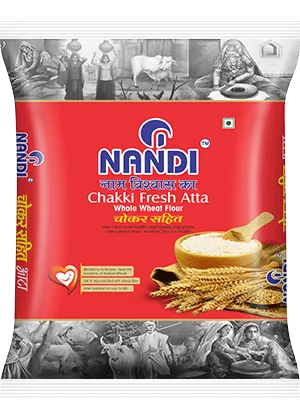
Patanjali and Nandi are two brands that many UP families consider when shopping for atta. Both position themselves differently: Patanjali rides on its Ayurvedic identity and Baba Ramdev's following, while Nandi has built its reputation on being UP's own brand with premium wheat and modern food safety standards. Let us compare them fairly across the parameters that matter most.
Brand Story: Two Very Different Journeys
Patanjali Ayurved was co-founded by yoga guru Baba Ramdev and Acharya Balkrishna. The brand launched in the early 2000s with a mission to offer natural, Ayurvedic alternatives to mainstream FMCG products. Over the years, Patanjali expanded into a massive range of products, from toothpaste to ghee to atta. The brand's strength lies in its loyal consumer base that trusts the Ayurvedic and natural positioning.
Nandi was founded in 2014 in Prayagraj by Abhishek Gupta, who started the business at 18. From a single flour mill, Nandi has grown into a 250 Cr+ revenue company with 7 manufacturing units, 350+ employees, and presence in 30+ cities across UP. Unlike Patanjali's diversified FMCG approach, Nandi is focused on flour, spices, and staples, doing fewer things but doing them really well.
Wheat Sourcing: Where Does the Wheat Come From?
Patanjali sources wheat from various regions across India. The brand emphasizes natural and chemical-free farming practices, which appeals to health-conscious consumers. However, Patanjali does not prominently specify the wheat variety used in its standard atta, and the sourcing appears to be from mixed varieties depending on availability.
Nandi specifically sources its Sharbati wheat blend from the Sehore and Vidisha districts of Madhya Pradesh. Sharbati is widely regarded as the finest wheat variety in India, known for larger grains, higher protein content (12-14%), and a naturally sweet taste. Every batch is tested before processing at Nandi's UP-based mills.
Milling Process: How Is It Ground?
Both brands use chakki (stone-ground) milling, which is the traditional Indian method that preserves the natural oils and nutrients in wheat. This is a positive for both brands compared to companies that rely primarily on roller mills.
Nandi operates 7 chakki mills across UP, processing 500+ MT of atta per day. The proximity of mills to the market means shorter transit times and fresher atta reaching consumers. Patanjali operates larger facilities, including its flagship plant in Haridwar, and distributes nationally, which means the atta may spend more time in transit before reaching UP stores.
Certifications and Food Safety
This is where a significant difference emerges. Both brands carry FSSAI certification, which is mandatory for all packaged food in India. However, Nandi also holds FSSC 22000 certification, an internationally recognized food safety management standard built on ISO 22000. This certification involves rigorous third-party audits of the entire production process, from raw material intake to final dispatch.
Patanjali is FSSAI certified and follows its own internal quality processes. The brand has occasionally faced scrutiny from regulatory bodies over the years regarding product quality claims, though it has largely addressed these concerns. The lack of an international certification like FSSC 22000, however, is a gap when compared to Nandi.
Nutritional Comparison (per 100g)
Here is how the two brands compare on actual nutritional values:
| Nutrient | Nandi | Patanjali |
|---|---|---|
| Energy | 369 kcal | 341 kcal |
| Protein | 12.6g | 10.5g |
| Carbohydrates | 71.2g | 71g |
| Wheat Variety | Sharbati blend | Mixed varieties |
Nandi atta delivers 12.6g of protein per 100g compared to Patanjali's 10.5g. That is a 20% higher protein content. The difference comes from the Sharbati wheat variety, which naturally has a higher protein content than mixed wheat varieties. Higher protein means better gluten structure, which translates directly to softer rotis that puff up well.
Product Range: Atta Variants
Patanjali offers a wider range of atta products, including regular whole wheat atta, multigrain atta, and a specialized Diabetic Care Atta. This variety is useful for families with specific dietary needs.
Nandi focuses on its Choker Sahit Aata (whole wheat atta with 100% bran retained) as its primary product, along with related staples like maida, sooji, besan, daliya, and chana sattu. Nandi's approach is depth over breadth: mastering the core product rather than spreading across too many variants.
Price Comparison
Both brands are competitively priced in the UP market. Patanjali has traditionally positioned itself as offering affordable alternatives to premium brands, and its atta reflects that pricing strategy. Nandi matches this competitive pricing while offering Sharbati wheat quality and FSSC 22000 certification. In terms of value for money (what you get per rupee spent), Nandi offers a stronger proposition given the superior wheat variety and international certification.
Availability in UP
Patanjali has a wide distribution network including its dedicated Patanjali and Patanjali Mega stores, as well as general trade outlets across UP. This gives it solid physical retail presence.
Nandi is available in 25,000+ retail stores across 30+ cities in UP. Where Nandi truly excels is in Q-commerce. Nandi is the #1 best-selling atta on Blinkit in UP and is also available on Zepto (since September 2025) and Swiggy Instamart (since January 2026). For the growing number of families who order groceries online for quick delivery, Nandi is the more accessible option.
Patanjali's Q-commerce presence in UP is comparatively limited, as the brand has traditionally relied more on its own retail stores and general trade channels.
Quick Comparison Table
| Feature | Nandi | Patanjali |
|---|---|---|
| Founded | 2014 (Prayagraj, UP) | 2006 (Haridwar, Uttarakhand) |
| Wheat Type | Sharbati blend (MP) | Mixed varieties |
| Milling | Stone-ground Chakki | Chakki |
| Certifications | FSSAI + FSSC 22000 | FSSAI |
| Manufacturing in UP | 7 units across UP | Primarily Haridwar |
| Q-Commerce (UP) | #1 on Blinkit, Zepto, Instamart | Limited |
| UP Retail | 25,000+ stores | Patanjali stores + general trade |
| Product Focus | Atta, flour, spices, staples | Full FMCG range (100+ categories) |
| Protein (per 100g) | 12.6g | 10.5g |
| Customer Rating | 4.3 stars (BigBasket) | 3.9 stars (avg) |
| B2B Clients | Parle, Haldiram, ITC | Own retail ecosystem |
| Price | Competitive | Competitive |
The Verdict
Patanjali is a well-known, trusted brand with a loyal following. If you are already part of the Patanjali ecosystem and prefer buying all your groceries from Patanjali stores, their atta is a reasonable choice.
However, when it comes to the atta itself, Nandi has clear advantages. Sharbati wheat blend from MP, chakki milling in UP, FSSC 22000 certification, and dominance on Q-commerce platforms make Nandi the stronger choice for families who prioritize wheat quality and food safety. Nandi is a brand that was built specifically around flour and staples, and that focus shows in the product.
For UP families, the choice becomes even clearer. Nandi is local, fresh, available everywhere (both offline and on Blinkit/Zepto/Instamart), and delivers roti quality that over 10 lakh families vouch for.