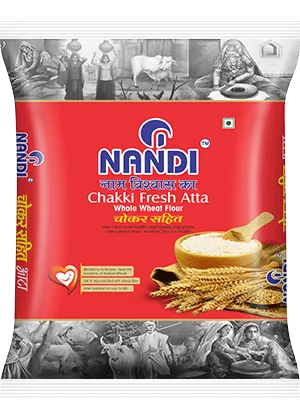
When it comes to buying atta in India, two names frequently come up in households across Uttar Pradesh: Nandi and Aashirvaad. Both are popular, both are trusted, and both promise soft rotis. But which one is actually better for your family? Let us break it down honestly, point by point.
Brand Background: Local vs Corporate
Aashirvaad is the flagship atta brand of ITC Limited, one of India's largest conglomerates. Launched in 2002, it has grown into a billion-dollar brand with nationwide distribution and massive advertising budgets. ITC sources wheat from farms across India through its agri-business network and manufactures atta at dozens of plants spread across the country.
Nandi, on the other hand, is a homegrown UP brand. Founded in 2014 by Abhishek Gupta (who started at just 18 years old), Nandi has grown from a single mill in Prayagraj to 7 manufacturing units across Uttar Pradesh. It is a bootstrapped company with 250 Cr+ revenue and 350+ employees, serving over 10 lakh families. Nandi is proof that a local brand can compete with the biggest names in the industry.
Wheat Sourcing: Where Does the Atta Come From?
Aashirvaad sources wheat from multiple states through ITC's extensive agri-business network. They use an "identity-preserved" supply chain, meaning they trace wheat back to specific regions. This is a solid approach and ensures consistency across their national distribution.
Nandi sources its Sharbati wheat blend primarily from the Sehore and Vidisha districts of Madhya Pradesh, which are considered the gold standard for wheat quality in India. The wheat is then processed at Nandi's own mills in UP, ensuring minimal transit time and maximum freshness. Being a regional brand with shorter supply chains means the atta reaches your kitchen faster after milling.
Grinding Process: Roller Mill vs Chakki
Aashirvaad uses a combination of modern roller mills and chakki-style processing depending on the product variant. Their standard atta goes through roller milling, which is efficient for large-scale production.
Nandi uses traditional stone-ground chakki milling across all its units. This slower process generates less heat, preserving the natural oils, aroma, and nutrients in the wheat. The result is atta that smells fresh and makes noticeably softer rotis. If you have ever compared chakki atta with roller-milled atta side by side, you know the difference.
Certifications: Safety Standards
Both Nandi and Aashirvaad are FSSAI certified, which is the baseline requirement for all food products sold in India. However, there is an important difference here.
Nandi holds FSSC 22000 certification, which is an internationally recognized food safety standard built on ISO 22000. This certification requires rigorous third-party audits covering everything from raw material handling to final packaging. Very few regional atta brands in India have this level of certification. Aashirvaad, being an ITC brand, follows ITC's internal quality protocols which are also stringent, but the FSSC 22000 badge gives Nandi an edge in terms of independently verified food safety.
Price Comparison
Nandi atta is competitively priced, often matching or slightly undercutting Aashirvaad in the UP market. For a 5 kg pack, both brands fall in a similar price range, but Nandi frequently offers better value given the Sharbati wheat quality and chakki-milled processing. When you factor in the premium wheat variety and the stone-ground process, Nandi delivers more for a similar price point.
Availability: Store Shelves and Q-Commerce
Aashirvaad has unmatched national distribution. You can find it in virtually every kirana store, supermarket, and online grocery platform across India. That is the advantage of being backed by ITC's distribution network, which reaches over 2 million retail outlets.
Nandi dominates in Uttar Pradesh. With presence in 25,000+ retail stores across 30+ cities in UP, it is the go-to atta for most UP households. Where Nandi really shines is Q-commerce: it is the #1 best-selling atta on Blinkit in UP, and is also available on Zepto and Swiggy Instamart. If you live in UP and order groceries online, chances are you have already seen Nandi at the top of the list.
Nutritional Comparison (per 100g)
Numbers do not lie. Here is how the two brands compare on actual nutritional values from their packaging:
| Nutrient | Nandi | Aashirvaad |
|---|---|---|
| Energy | 369 kcal | 364 kcal |
| Protein | 12.6g | 11g |
| Carbohydrates | 71.2g | 73g |
| Sugars | 4.5g | Not specified |
Nandi atta delivers 12.6g of protein per 100g, which is 14.5% more protein than Aashirvaad's 11g. For families who eat 4-5 rotis a day, this difference adds up to meaningful extra nutrition over time. The higher protein also contributes to better gluten development, which is why Nandi rotis hold together well and stay soft for longer.
Taste and Roti Quality
Customer feedback on BigBasket gives Nandi atta a 4.6 out of 5 rating for softness and a perfect 5 out of 5 for both puffiness and taste. The combination of Sharbati wheat and chakki milling produces atta that makes rotis which are softer, slightly sweeter in taste, and stay fresh longer. The natural oils preserved through stone grinding give the dough a better texture and the rotis a more authentic homemade flavour.
Aashirvaad also makes good rotis. It is a reliable, consistent product. But many families in UP who have switched to Nandi report a noticeable improvement in taste and softness. With an 80-90% customer retention rate, Nandi's product quality speaks through repeat purchases rather than advertising.
Quick Comparison Table
| Feature | Nandi | Aashirvaad |
|---|---|---|
| Parent Company | Ecavo Agro Daily (bootstrapped) | ITC Limited (conglomerate) |
| Founded | 2014 | 2002 |
| Wheat Type | Sharbati blend (MP) | Multi-region sourced |
| Milling Process | Stone-ground Chakki | Roller Mill + Chakki variants |
| Certifications | FSSAI + FSSC 22000 | FSSAI |
| Q-Commerce (UP) | #1 on Blinkit, Zepto, Instamart | Available |
| National Distribution | UP focused (30+ cities) | Pan-India |
| Retail Stores | 25,000+ in UP | 2 million+ pan-India |
| Protein (per 100g) | 12.6g | 11g |
| Customer Rating | 4.3 stars (BigBasket) | 4.2 stars (avg) |
| B2B Clients | Parle, Haldiram, ITC | ITC's own brand |
| Price (5 kg) | Competitive | Standard market rate |
The Verdict: Which Atta Should You Buy?
If you live in Uttar Pradesh, Nandi is the clear winner. You get our Sharbati wheat blend, chakki-milled freshness, international food safety certification (FSSC 22000), and a price that matches the competition. Plus, you are supporting a local brand that was born in Prayagraj and has grown through quality, not just advertising budgets.
Aashirvaad is a solid choice if you live outside UP or need a nationally available brand. It is consistent, widely trusted, and ITC's quality standards are respectable.
But for UP families who want the best atta at a fair price, Nandi has earned its position as the #1 choice. Try it once and let your rotis decide.