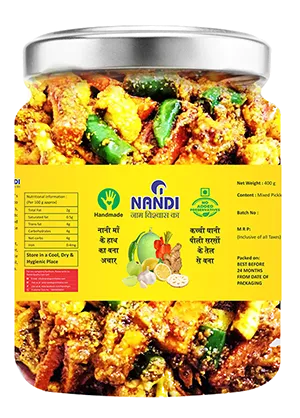
No Indian meal is truly complete without a side of achar. Pickle is not just a condiment in India. It is an emotion, a tradition passed down through generations, and an art form that varies from state to state, family to family. Here is everything you need to know about Indian pickles.
Types of Indian Pickles
Oil-Based Pickles (North Indian Style)
The most common type across North India. Raw vegetables or fruits are cut, sun-dried, mixed with spices, and preserved in mustard oil. The oil creates an anaerobic seal that prevents bacterial growth. These pickles improve with age as flavours meld and mature. Nandi's range of pickles follows this traditional method.
Vinegar-Based Pickles (South Indian / Goan)
Use vinegar instead of oil as the preserving medium. The acidity of vinegar prevents spoilage. These are tangier and lighter than oil-based pickles. Common examples: Goan prawn pickle, Kerala lime pickle.
Brine Pickles
Vegetables preserved in heavily salted water. Common in Andhra Pradesh. The salt draws out moisture from vegetables, creating a natural preservation environment.
Quick/Instant Pickles
Made fresh and consumed within a few days. Not meant for long storage. Lemon pickle, onion pickle, and green chilli pickle often fall in this category.
The Role of Oil in Pickle Making
Mustard oil is the gold standard for North Indian pickles. Why?
- Natural preservative: Allyl isothiocyanate in mustard oil has antimicrobial properties
- Flavour: The sharp, pungent taste of kachi ghani mustard oil complements spices beautifully
- Sealing: Oil floats on top and creates a barrier against air and bacteria
- Shelf life: Properly made mustard oil pickles can last 12+ months
Nandi pickles use pure kachi ghani mustard oil, which is cold-pressed to retain its natural potency and flavour.
Spices in Pickling
The spice blend is what makes each pickle unique. Common pickling spices include:
- Mustard seeds: Roasted and coarsely ground. The base of most pickle masala.
- Fenugreek seeds: A tiny amount adds bitterness that balances the sour and spicy notes.
- Fennel seeds: Sweetness and aroma.
- Red chilli: Heat and colour. Nandi pickles use roasted and coarsely ground spices for deeper flavour.
- Turmeric: Colour, flavour, and natural preservation.
Storage Rules for Long-Lasting Pickles
- Always use a dry spoon. Moisture is the enemy of pickle. A wet spoon introduces water and bacteria.
- Keep oil level above the pickle. The oil barrier is your first line of defence against spoilage.
- Store in a cool, dry place. Avoid direct sunlight and heat. A kitchen shelf away from the stove is ideal.
- Refrigerate after opening. Once the seal is broken, refrigeration extends the life significantly.
- Glass or food-grade plastic only. Never store pickle in metal containers. The acid in pickle reacts with metal.
Nandi Pickle Range
Nandi's four pickles are crafted in small batches using traditional recipes:
- Mix Pickle: A tangy medley of seasonal vegetables and spices. The crowd pleaser.
- Mango Pickle: Classic aam ka achar from hand-cut raw mangoes.
- Green Chilli Pickle: For those who like it hot. Fresh green chillies in mustard oil.
- Red Chilli Pickle: Bold stuffed red chilli achar. Maximum flavour and heat.
All come in food-grade 400g bottles with pull-tag seals for easy, mess-free opening. MRP Rs 110 per bottle, with a 12-month shelf life.